
What this work called for
Clinical and member-facing teams often have limited time with people navigating chronic illness, resistance, fear, and competing priorities. The learning challenge is not just explaining Motivational Interviewing. It is helping staff use it inside real conversations.
How I approached it
- Structured learning around righting reflex, ambivalence, sustain talk, change talk, OARS, and the 4-process MI model.
- Built guides that asked staff to practice skills on member calls and return with examples.
- Translated behavior-change concepts into language healthcare employees could use without sounding scripted.
What this shows about how I lead
- Builds learning around human behavior, not memorization.
- Connects communication skill to care quality and member experience.
- Creates reinforcement between sessions so learning carries into the work.
Supporting evidence
Behavior-change communication
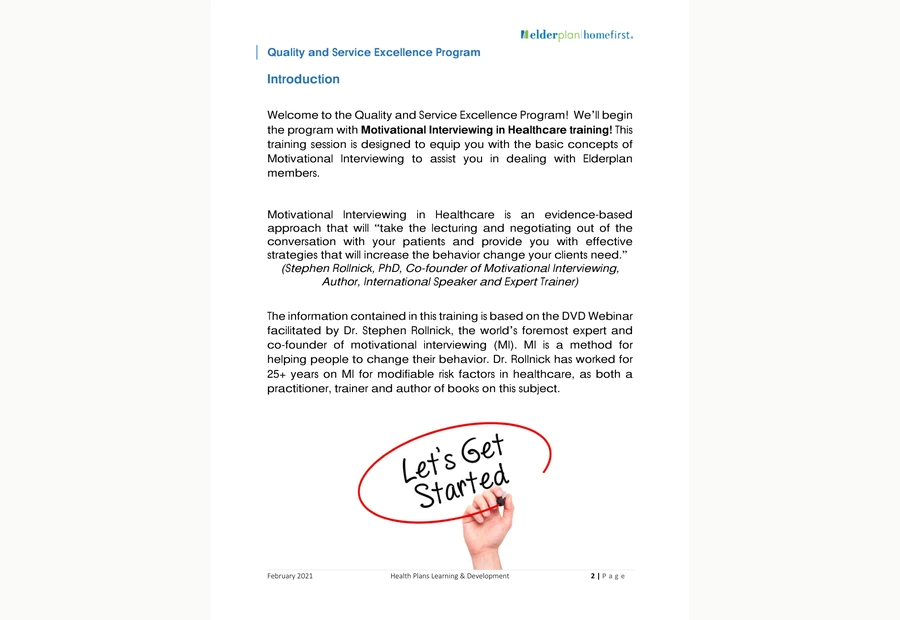
Motivational Interviewing, OARS, change talk, member conversations
Service quality and call coaching
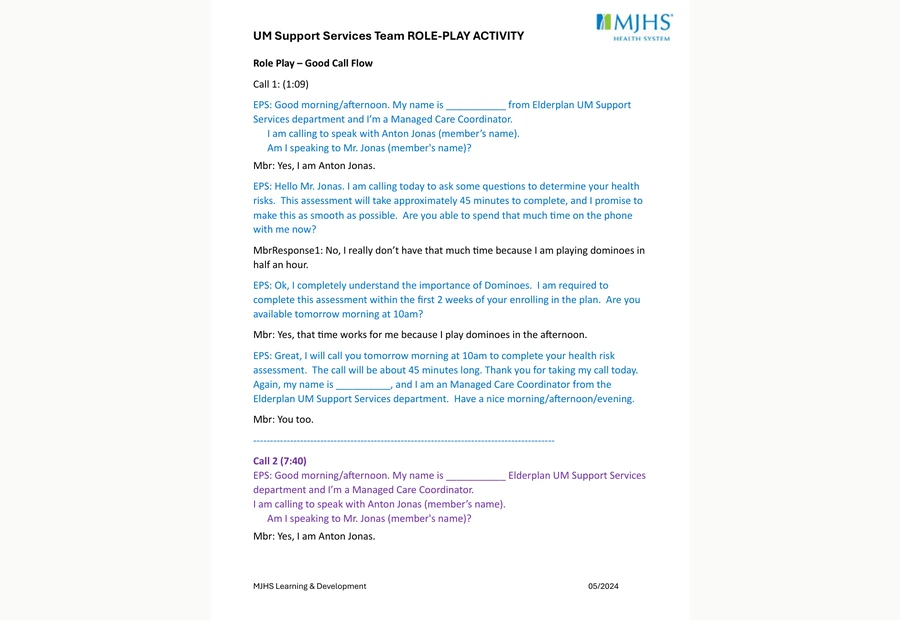
Role play, call-flow practice, compliance cues, coaching points